

When Doctors Deviate Online
Mayo student’s misogynistic clips and what a curriculum can't fix
Recently a Mayo Clinic medical student caught the national spotlight for publishing a distasteful social videos involving him, a catheter, and the female genitalia. Every social media influencer in the free world news jacked the story and clamored for the immediate dismissal of this rogue student.
I’m not going to make this kid’s digital footprint any wider by linking out. And I won’t try to browbeat the professional educators at Mayo. They know what they’re doing. If you want to see it, y’all are industrious enough to dig it up.
I do have some thoughts on the matter, however.
And I have some standing here. A few years back I was appointed Director of Digital Professionalism at Baylor College of Medicine. I did all the things: built a four-year curriculum, shaped policy, trained staff and post-grads, etc. Along the way I handled my share of digital deviants. It was a ride, for sure.
So when I say I’ll offer a more measured perspective than the ranting Instagram influencers, I mean that less as a boast and more as a promise.
————
What’s interesting is we don’t see this kind of professional transgression like we once did. At the dawn of the internet and the early days of social media, doctors stumbled as they figured out what to do in the new public arena. Less so now. I suspect that fledgling users have more voices and power users to watch and emulate.
As the number of public physicians rose, we professionally went into a weird, paranoid period. When Twitter was in its early meteoric rise there were obsessive concerns about what was “professional” and “unprofessional.” In fact, there’s a rich body of early medical literature in journals like JAMA that did things like plot foul language over time by medical professionals. Today those papers read like something from The Onion. Once all the doctors began cursing, the studies became futile and the pearl clutching subsided.
I suspect those building careers in professionalism didn’t want to see the data.
————
The system has a responsibility to educate trainees on how to carry themselves in very public places. Managing a digital presence as a professional is different from managing one as a frat boy. When trainees fail, it can (not always) reflect our failure as educators. I don’t know this young man’s history, and how Mayo handles it will depend on factors opaque to all of us. As it should be.
That said, a tight curriculum won’t fix stupid. There will always be those with judgment so bad that a good education won’t prevent disasters. This is true in all aspects of medicine.
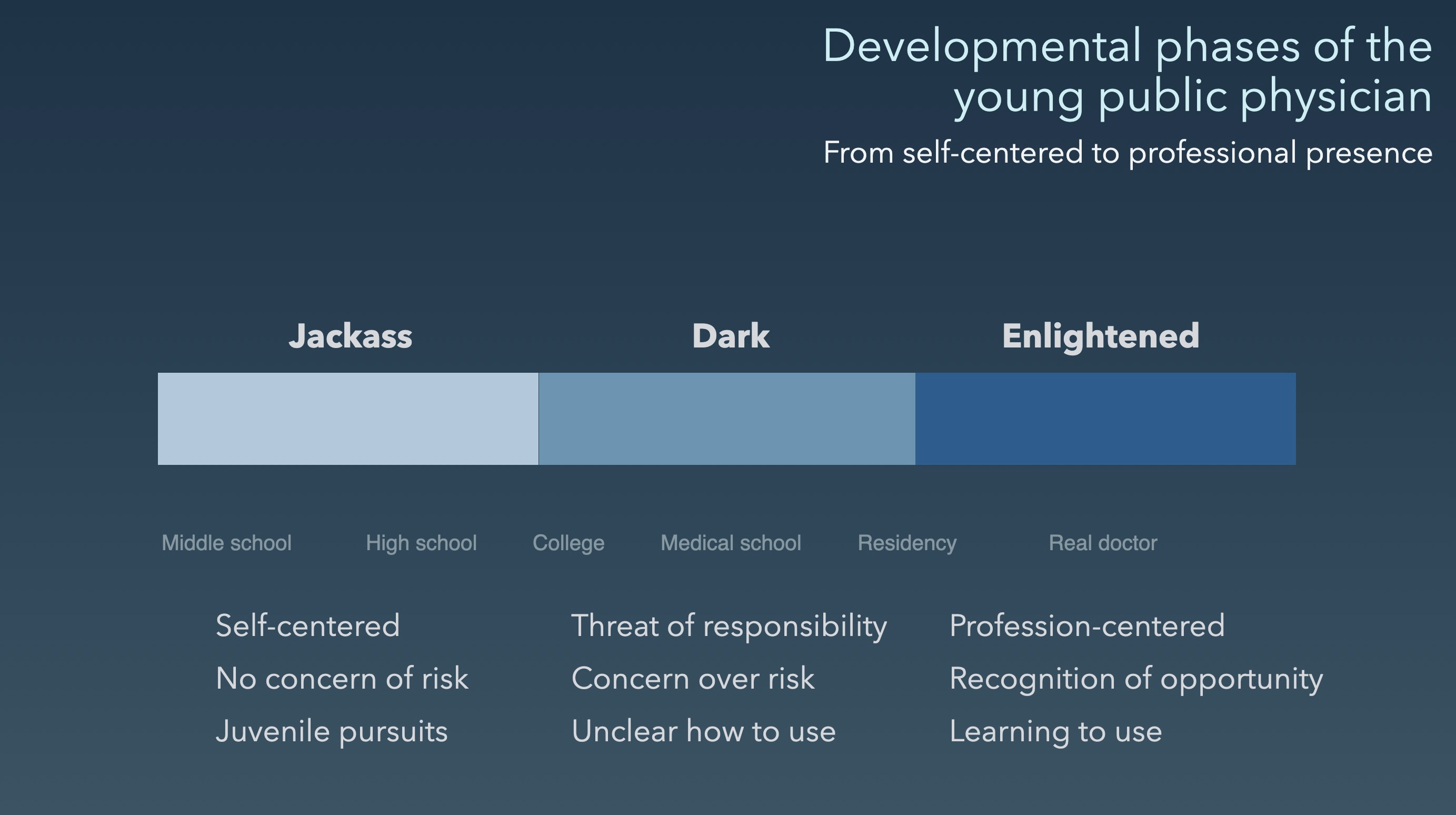
Intent matters too, and here’s where this case gets harder to excuse. Many problems physicians face online happen because of the speed of digital. There are those moments where we’re moving too fast, share something impulsive, and realize afterward it wasn’t a good idea. We’ve all done this. But those narrow-frame lapses are different from conceiving, filming, editing, posting, and promoting a video clip. This is a process with plenty of steps to reconsider what you’re doing.
One of the persistent blind spots for new trainees is context collapse. We calibrate our behavior to our context … how you carry yourself in Vegas with college friends is different from how you handle yourself in church. Most of us learn this code early. What’s invisible to many trainees is that public digital venues mash up all those contexts simultaneously. In one social space you might find your former fraternity brothers, your rabbi, your medical school dean, and your patients. You simply can’t perform for all of them at once.
And even when intent is good, perception trumps reality. Gallows humor lands differently in public than it does in the OR lounge. If you’re unsure, get a gut check from a colleague before you post.
One more thing worth saying: you probably think you have no digital footprint. Do a vanity search on Google or ChatGPT. You’ll see. The only digital properties you fully control are the ones you build — LinkedIn, Doximity, your hospital bio. Articles, news reports, and conversations someone has about you are completely out of your hands. Which is all the more reason to manage what you can.
————
At the end of the day, being a doctor is a privilege. The tension between individual expression and responsibility to community remains one of the core challenges of the modern physician.
And my role at Baylor? I trained myself out of a job. Founded in an unfounded fear, it didn’t bear out for a full-time salary. Texas Children’s The Woodlands was under construction, and I got pulled into one of my first leadership stints. That’s behind me now. But apparently it’s not far enough behind me that I don’t still have opinions about it.
For fun you can check out an online resource that I made a few years back — The Public Physician. Some of it’s dated but kind of interesting.
————
I promise in the next few weeks to send out a graphic showing the history of docs online.
This is so interesting - from my perspective both as a doctor who puts a lot of stuff online and as a medical educator. I'm surprised to hear that Baylor didn't think the course was necessary any longer.
😎